Aug 11, 2026
7-Day Italy by Train: The Ultimate Itinerary for First-Time Visitors
Italy is one of the best countries in Europe to explore by train.
Read More
Train travel is one of the easiest ways to explore Europe, but even the best-planned journey can sometimes be disrupted by delays, cancellations or unexpected changes.
If your train is delayed or cancelled, the most important thing is not to panic. In many cases, there are alternative services or solutions available.
The key is knowing what to check, who to contact and what information to keep.
This guide explains what to do if your European train is delayed or cancelled and how to reduce the impact on the rest of your journey.
If you notice that your train is delayed, your first step should be to check the latest information from the railway operator or station.
Look for:
Information can change quickly during a disruption, so don’t rely only on an earlier departure board or screenshot.
If you’re already at the station, check the electronic departure boards and listen for announcements
A short delay doesn’t necessarily mean your entire itinerary will be affected. If your train is still running, check whether you have a connection afterwards and how much time you will have between trains.
For example, if your original itinerary was:
Paris → Brussels → Amsterdam
and your first train is delayed, the most important question is whether you’ll still be able to make the second train.
If the delay affects your connection, check the operator’s instructions before making any new booking yourself.
Planning a journey with several connections? Our guide to planning a train trip across Europe explains how to build your itinerary and avoid unnecessarily complicated connections.
This is one of the most common concerns for travellers taking multiple trains.
What happens next can depend on several factors, including:
If your first train is delayed, don’t immediately purchase another ticket without checking what options are available.
Speak to railway staff or contact the relevant customer service team first.
They may be able to explain whether you can take another service or what you should do next.
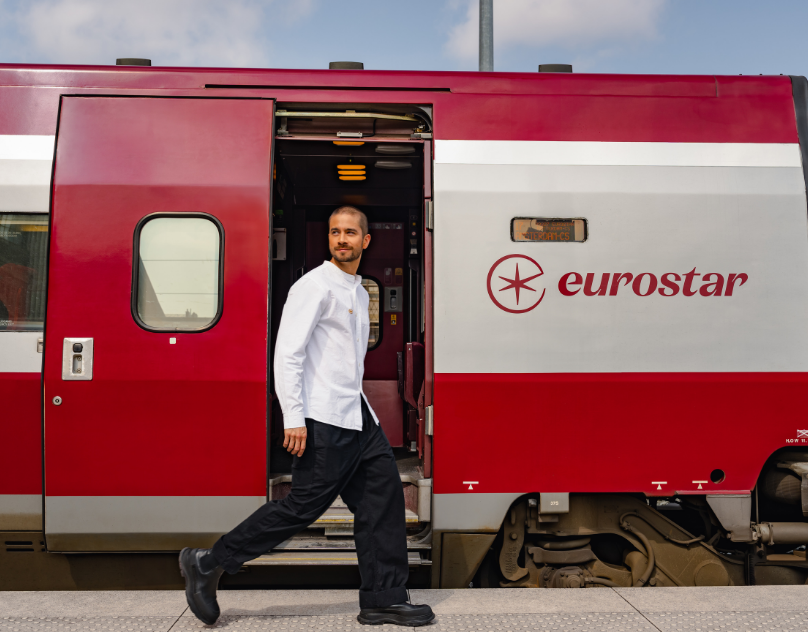
If your train has been cancelled, check the information provided by the operator.
Depending on the circumstances and the conditions that apply to your journey, you may have options such as:
The exact solution can vary, so it’s important to follow the instructions provided for your specific ticket and journey.
When a train is cancelled, your first instinct may be to find another train and buy a new ticket.
Before doing that, check whether your existing ticket can be used on an alternative service or whether the railway operator is providing another solution.
This can potentially save you from paying twice for the same journey.
Keep your original ticket and any messages or notifications relating to the disruption.
If you purchased your ticket through a reseller or booking platform, check the information provided with your booking to understand who to contact in case you need assistance.
Keep your:
If you need to contact customer support, having all this information ready can make the process much easier.
Possibly, but there isn’t one universal rule for every train journey in Europe.
Your options can depend on:
For this reason, don’t assume that every delay automatically results in a refund—or that every cancellation is treated in exactly the same way.
Check the conditions associated with your specific booking and follow the instructions provided by the relevant railway operator or booking platform.

If something goes wrong during your journey, documentation can be extremely useful.
Keep:
If you need to request assistance, compensation or a refund later, having a clear record of what happened can make the process easier.
One of the best ways to reduce the stress of a delayed train is to avoid unnecessarily tight connections when planning your itinerary.
A connection that looks perfect on paper may become difficult if your first train is even slightly late.
When planning a multi-city trip, consider:
Giving yourself some extra time can make a big difference.
Switzerland deserves particular attention because many travellers build itineraries around multiple connections and scenic rail journeys.
If you’re travelling through Switzerland and miss a connection, the next step depends on the type of ticket and journey you have.
Travelling through Switzerland? Read our guide to what to do if you miss a train in Switzerland for specific advice on handling missed connections during your Swiss rail journey.
→ Link to: What to Do If You Miss a Train in Switzerland

If you’re at the station when a disruption occurs, stay calm and follow the information provided.
A simple checklist is:
1. Check the departure board.
Look for your train number and updated information.
2. Check the operator’s information.
Look for instructions regarding delays, cancellations or alternative services.
3. Check your connection.
If you’re travelling onwards, find out whether the disruption affects the next part of your journey.
4. Speak to station staff if you’re unsure.
They can often direct you towards the appropriate service desk or platform.
5. Keep your ticket and booking information.
Don’t delete emails or notifications related to the disruption.
You can’t control delays, but you can make your itinerary more resilient.
Before travelling:
This is particularly important when you’re travelling across several countries.
Multi-country itineraries can involve several operators, currencies, languages and ticket conditions.
For example:
London → Paris → Brussels → Amsterdam
may involve several different stages of your journey.
If one train is delayed, the effect on the rest of your itinerary depends on how your tickets and connections were booked.
This is why it’s worth reviewing the complete itinerary before travelling rather than looking at every train independently.
If your European train is delayed or cancelled, remember:
Most importantly, remember that a delay doesn’t necessarily mean your entire trip is ruined.
Train delays and cancellations are frustrating, but knowing what to do can make the situation much easier to manage.
The best preparation is to understand your itinerary, leave reasonable time for connections and keep your booking information easily accessible.
And if something does go wrong, check your options before making a new booking or assuming that you have to start your journey again from scratch.
With a little preparation and flexibility, an unexpected disruption doesn’t have to derail your entire European adventure.
Planning your next European rail adventure? Compare routes and connections with RailClick and build your journey with confidence.

Real moments from our global community of modern voyagers.