Mar 12, 2026
Where to buy train tickets in Italy online (complete guide 2026)
Where to buy train tickets in Italy online (complete guide 2026) Travelling by train is one of the…
Read More
Rome is one of those cities where food is part of the experience. From a plate of creamy carbonara to a freshly made supplì, discovering the city also means discovering the traditions behind its cuisine.
If you’re planning a trip to Rome, here’s what to eat, where to look for it and how to turn your visit into a delicious Italian adventure.
Roman cuisine is famous for being simple, generous and full of flavour. You don’t need an elaborate restaurant to enjoy some of the city’s most traditional dishes.
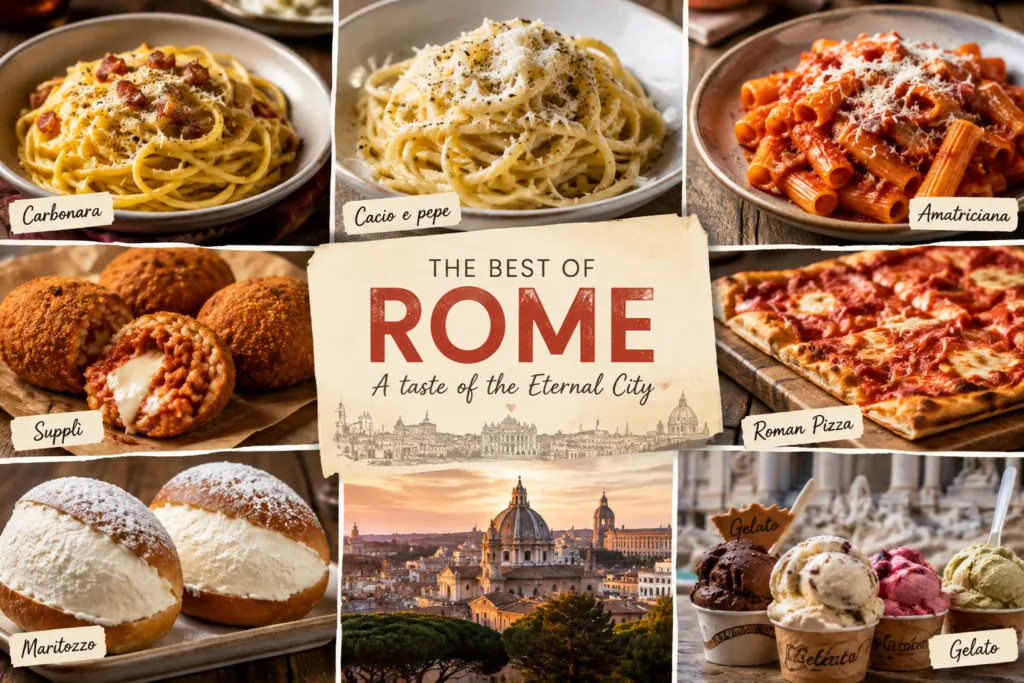
One of Rome’s most famous dishes, carbonara is traditionally made with pasta, eggs, Pecorino Romano and guanciale.
It’s rich, creamy and very Roman—without needing cream.
Another classic is cacio e pepe, made with pasta, Pecorino Romano and black pepper.
It’s proof that some of the best Italian dishes can come from just a few ingredients.
Made with tomato, guanciale and Pecorino Romano, amatriciana is another Roman favourite.
It’s a great option if you want something slightly more tomato-based.
Looking for something quick?
Try a supplì, a fried rice croquette traditionally filled with mozzarella and tomato sauce.
They’re perfect as a snack or starter before a larger Roman meal.
Roman pizza is different from the Neapolitan style you may already know.
Depending on where you eat, you can find thin and crispy pizza or pizza al taglio, sold by weight and cut into rectangular pieces.
Rome has restaurants and food spots everywhere, but some neighbourhoods are particularly interesting if you want to combine sightseeing with local food.
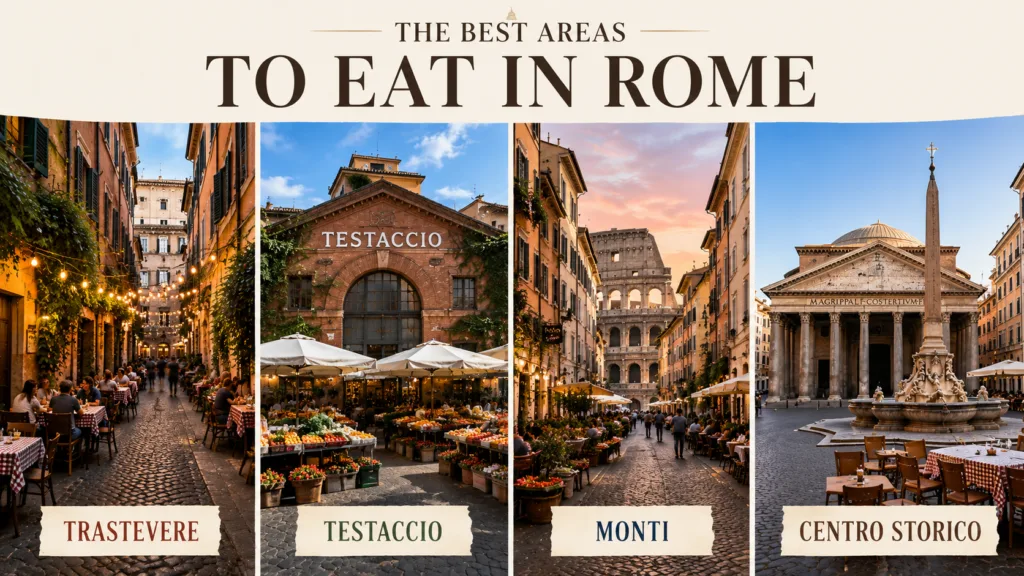
Trastevere is one of the city’s most atmospheric neighbourhoods.
Its narrow streets, lively squares and traditional restaurants make it a popular place for an evening meal.
It’s a great area to wander around without a strict plan and stop when you find a restaurant that catches your attention.
For travellers particularly interested in traditional Roman food, Testaccio is worth exploring.
The neighbourhood has a strong connection with Roman culinary traditions and offers a more local atmosphere than some of the busiest areas around the main monuments.
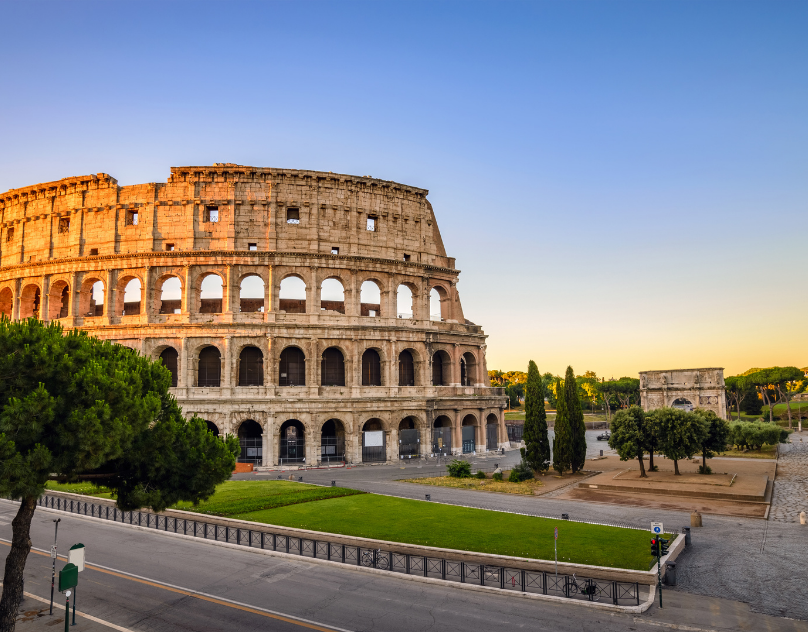
Located close to the Colosseum, Monti combines historic streets with restaurants, cafés and wine bars.
It’s a convenient option if you want to explore the neighbourhood after visiting some of Rome’s main sights.
If you’re spending your first days in Rome visiting the Pantheon, Piazza Navona and Trevi Fountain, you’ll find plenty of places to eat around the historic centre.
Just remember that location doesn’t always guarantee authenticity—take a moment to look at the menu and explore a little beyond the busiest tourist streets.
One of the best ways to experience Rome is to combine its food with its neighbourhoods.
Explore Monti and look for a traditional Roman meal after visiting the ancient city.
Continue towards the surrounding neighbourhoods and take a break with pasta, pizza or a traditional Roman snack.
This is the perfect moment for an evening meal followed by gelato while exploring the streets after sunset.
The idea is simple: don’t just plan where you’re going to eat—plan your meal around the neighbourhood you’re discovering.
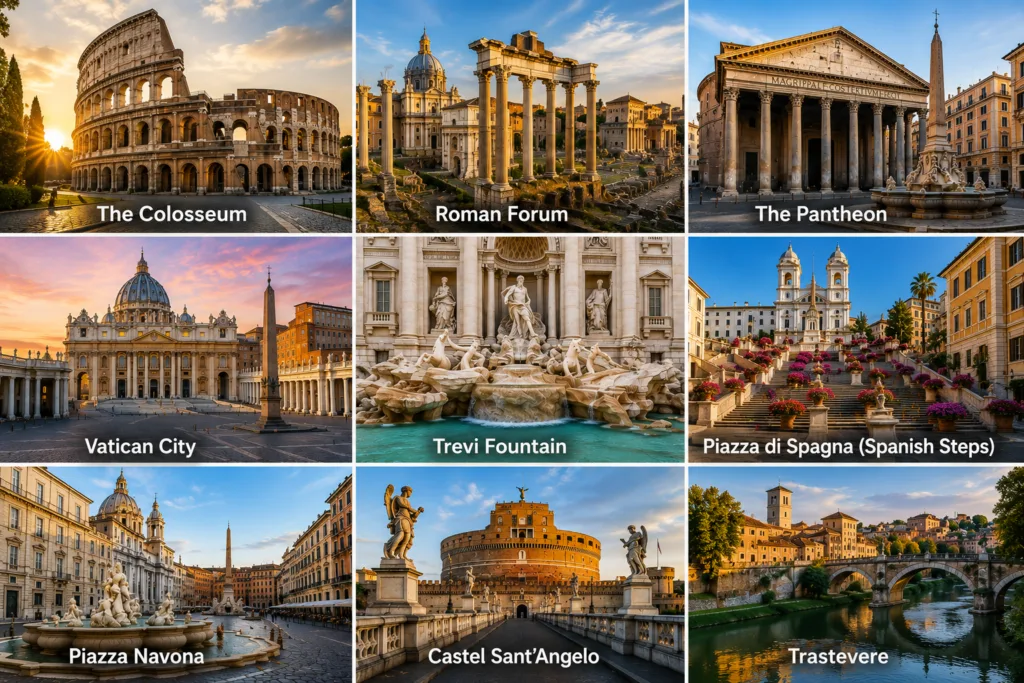
For a first visit, three days in Rome gives you enough time to combine sightseeing and food without constantly rushing.
You could dedicate:
And if you’re staying longer, even better. Rome has enough neighbourhoods and restaurants to keep discovering something new.
One of the best things about travelling through Italy is discovering how much the food changes from one region to another.
After Rome, you could continue by train towards:
This is where travelling by train becomes part of the experience. You can enjoy a meal in Rome and, a few hours later, find yourself exploring a completely different culinary culture.
If pizza is your priority, don’t stop in Rome. Continue south and discover Naples, the city famous for one of the world’s most iconic pizza traditions.
Did You Know Naples Is the Capital of Pizza? Discover It! here
The best train depends on your route and how quickly you want to travel.
For journeys between major cities, high-speed services can be particularly convenient. Regional trains, meanwhile, are useful for shorter journeys and smaller destinations.
Before booking, it’s worth understanding the differences between the main train options available in Italy.
Travelling between Italian cities? Our guide to Regionale, Frecciarossa and Italo explains the differences between Italy’s main train services and when each option can make sense.
If food is one of the reasons you’re travelling to Italy, you can build your itinerary around the destinations you most want to taste.
Start in Rome for traditional Roman cuisine, continue towards Florence or Bologna, and then head south to Naples for pizza.
ItaliaTren makes it easier to explore train connections across Italy and organise a multi-city itinerary around the destinations you want to discover.
Instead of treating each train journey separately, you can think of your trip as one continuous Italian experience.
Rome is a city to explore with your eyes, your feet—and definitely your appetite.
From carbonara and cacio e pepe to supplì and Roman pizza, the city’s food traditions are an essential part of discovering its character.
And if you have time to continue your journey, take the train and discover how different Italian cuisine can be from one city to the next.
Because in Italy, sometimes the best way to choose your next destination is simply to follow the food.
Ready to discover more of Italy? Explore train connections with ItaliaTren and build your next Italian food adventure.

Real moments from our global community of modern voyagers.