Apr 7, 2026
Complete guide to planning a multi-country train trip in Europe
Complete guide to planning a multi-country train trip in Europe Travelling across Europe by train is one of…
Read More
Travelling around Europe by train with a pet is possible, but the rules are not the same everywhere.
The type and size of your pet, whether it travels in a carrier, the train operator and even the specific route can affect the conditions.
So, before booking your journey, always check the pet policy for each train in your itinerary.
Here is a practical guide to travelling with dogs and cats by train in some of Europe’s most popular destinations.
Yes, in many cases. Small dogs and cats are commonly allowed on European trains, usually in a suitable carrier.
Larger dogs may also be accepted, but they can require a separate ticket, leash and muzzle.
Assistance and guide dogs generally have different rules and are often allowed free of charge.
The important thing is that there is no single European rule for travelling with pets by train.
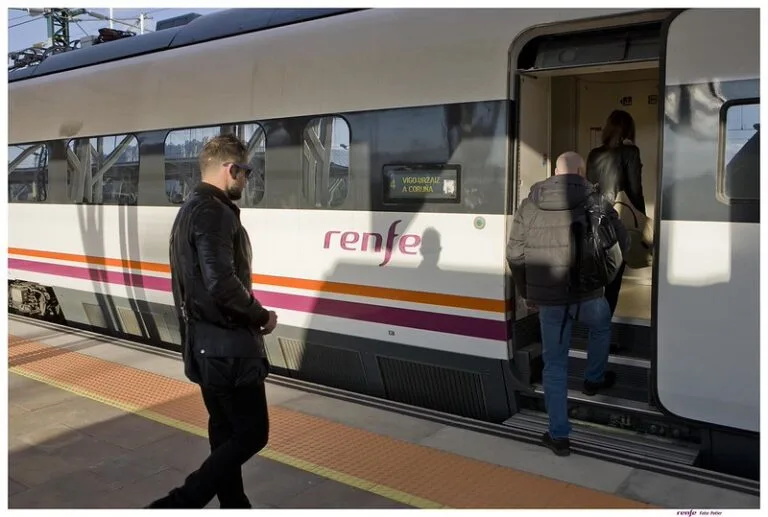
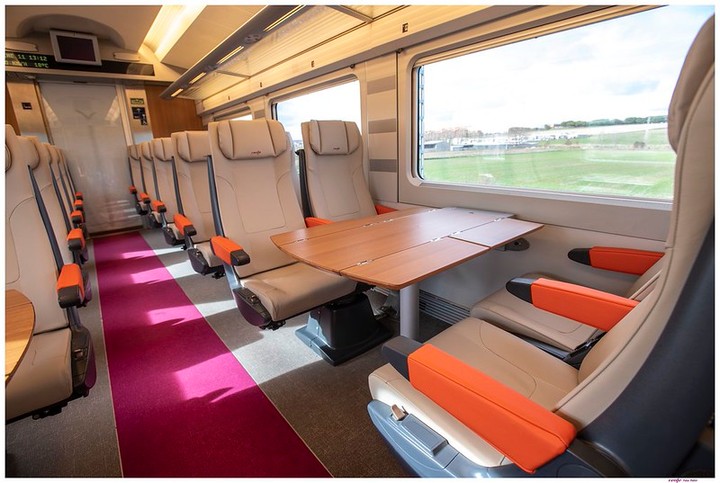
Spain is becoming increasingly pet-friendly when it comes to train travel.
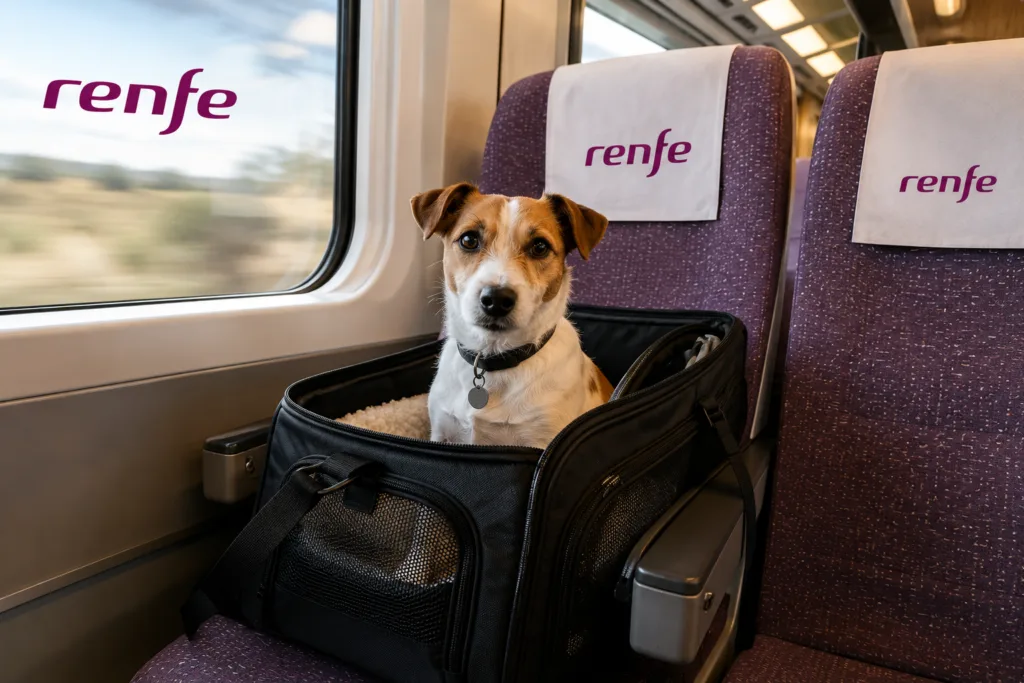
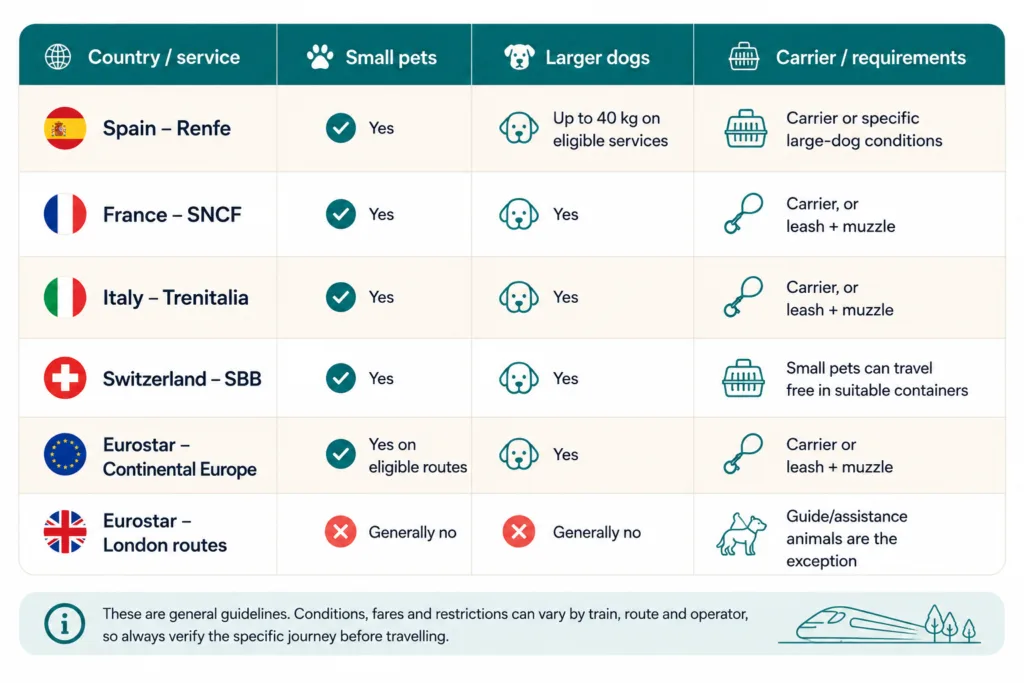
On Renfe, dogs, cats and several other small companion animals can travel in a carrier of up to 60 × 35 × 35 cm, with a maximum weight of 10 kg on many services. One pet is allowed per passenger and the pet must have its own ticket where required.
There is also an important recent change: Renfe now allows dogs weighing up to 40 kg to travel without a carrier on eligible AVE, Avlo, Larga Distancia, Avant and Media Distancia services, subject to specific conditions. These include a designated seat, leash requirements and the corresponding pet supplement.
For Cercanías services, pets can travel without a weight limit, although dogs must be leashed and muzzled.
Tip: When booking a Spanish train, check whether your specific service displays the pet option before travelling.
France also allows pets on many domestic trains.
On TGV INOUI and INTERCITÉS, small pets can travel in a closed carrier, while larger dogs can travel on a leash and must wear a muzzle. SNCF currently lists a fixed pet fare starting from €10 for these journeys.
For international routes, the rules can be different.
For example, TGV Lyria between France and Switzerland accepts small animals in carriers and larger dogs on a leash and with a muzzle, with different fares depending on the type of pet.
Italy is particularly interesting for travellers planning a multi-city trip.
On Trenitalia, small dogs, cats and other small pets can travel free of charge when kept in a carrier measuring no more than 70 × 30 × 50 cm, with one carrier allowed per passenger.
Larger dogs can also travel, provided they have the required ticket and are kept on a leash and wearing a muzzle.
On Frecce and Intercity services, Trenitalia currently offers a €5 dog fare from Sunday to Friday and €1 on Saturdays. Regional trains have different pricing conditions.
Travellers should also carry the required dog registration and health documentation, or the appropriate pet passport for international travellers.
Planning an Italian train adventure with your pet? Our guide to travelling around Italy by train explains how to combine the country’s major cities by rail.
Switzerland has its own approach to travelling with animals.
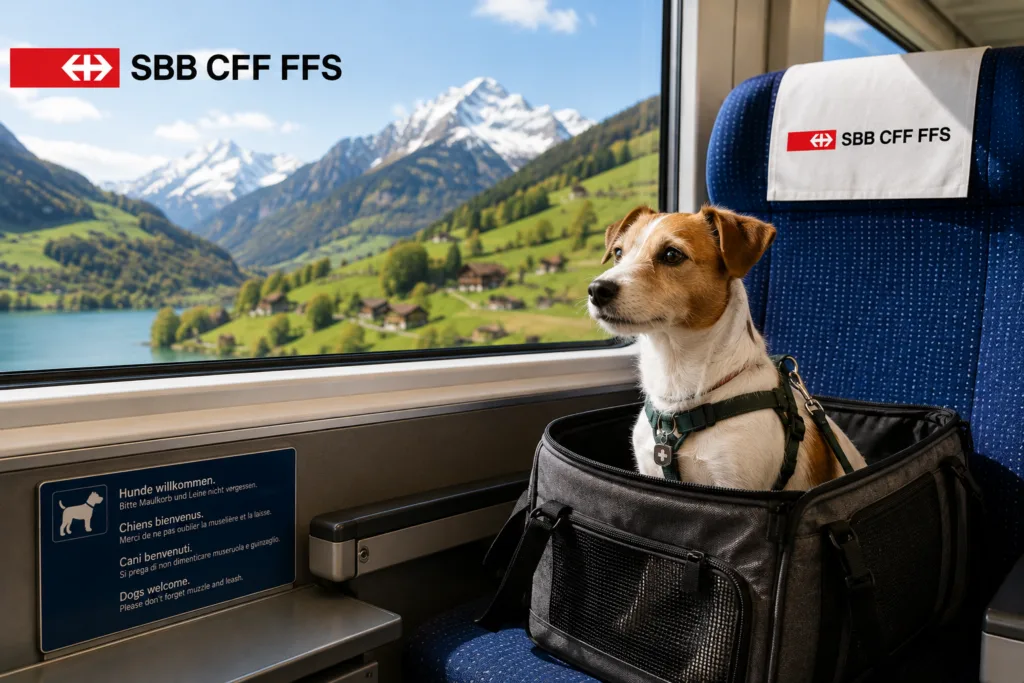
On SBB, dogs of any size generally require a ticket, usually at half the second-class fare or the applicable minimum fare.
There is an exception for small dogs up to 30 cm at the withers: they can travel free as hand luggage when placed in a suitable carrier, basket or container under the seat. The same basic rule applies to small cats, rabbits and birds in appropriate containers.
For longer journeys, Switzerland also offers a Day Pass for Dogs, currently CHF 25 per day, allowing dogs to travel on participating public transport services.
Travelling through Switzerland with your pet? Our guide to travelling around Switzerland by train can help you plan your route before you go.
This is where things become particularly important.
Pets are not allowed on Eurostar services to and from London, except for guide and assistance animals.
However, pets are allowed on many Eurostar services between Belgium, France, the Netherlands and Germany.
On these routes, small domestic animals weighing less than 6 kg can travel free when placed in a carrier no larger than 45 × 30 × 25 cm.
Larger dogs can travel with a €30 dog fare and must be leashed and muzzled.
This means that if you’re planning something like:
London → Paris → Brussels → Amsterdam
you need to pay particular attention to the London–Paris section, because the Eurostar pet rules are different there.
Planning a European trip with Eurostar? Read our guide to travelling from London to Paris by Eurostar before adding your next destination.
Before leaving for the station, make sure you have:
For international journeys, check the entry requirements of every country you’re visiting, not just the railway operator’s rules.
Don’t assume that because your pet is accepted on one train, it will automatically be accepted on the next.
Travelling with a pet can make changing trains more complicated. Avoid extremely tight connections whenever possible.
Have your pet’s identification, health documents and travel information easily available.
A direct train can be much easier than several connections, particularly with a nervous pet.
Pet policies can change, so always check the current rules shortly before travelling.
A European rail adventure with a dog or cat can be perfectly possible—but it requires a little more planning than travelling alone.
The key is to think about the entire itinerary, not just one train.
If you’re travelling across several countries, check:
Country → Operator → Train → Pet size → Carrier requirements → Ticket → Documents
Once you’ve checked those details, you can focus on enjoying the journey together.
Travelling by train with a pet can be one of the most comfortable ways to explore Europe, particularly when compared with navigating airports and multiple transfers.
But there is one rule worth remembering:
Never assume that pet policies are the same across European trains.
Check each operator, each route and each ticket before you travel.
That small amount of preparation can make the difference between a stressful journey and a great adventure with your four-legged travel companion.
Planning a European train adventure with your pet? Explore routes with RailClick and start building your journey.

Real moments from our global community of modern voyagers.